Drywall Retexturing San Diego
Retexturing isn't about burying old texture under thick mud—it's about rebuilding the surface with controlled skim coats. That's what supports every future coat of primer and paint, not just the first one. Whether the goal is a hand-trowel texture, an imperfect smooth finish, or Level 5 walls, the process always comes first.

SGP Drywall
Built on reputation, not advertising.
EXCELLENT Based on 129 reviews
 Posted on Google
 Radhwan AlabsiEdgar and the team did a fantastic job on our new construction ADU. We needed drywall hung and a smooth, high-quality finish, and they completed just under 1,100 sq ft quickly and professionally. The results exceeded our expectations — it looks even better than we envisioned! Thank you, Edgar and team!Posted on Google
 N MondragonGreat job! The work was outstanding and fast, super clean, the best a have ever seen! All contractors should be that good!Posted on Google
 Vicky BernhardGreat Job!! ProfessionalPosted on Google
 Angel omar Salazar ayalaGreat experience with SGP Drywall. They took our thick plaster walls and refinished them to a smooth finish that completely changed the space. We were living in the home during the work, and they kept everything clean and easy to live around. The job took less than a week, communication was solid, and the house honestly feels bigger and brighter now. Would definitely recommend.Posted on Google
 Angelo CaveWe hired SGP Drywall to completely refinish our walls and ceilings, changing our heavy knockdown texture to a smooth finish. Edgar was incredibly helpful from start to finish. His patience, clear explanations, and expert recommendations made the entire process seamless. The final quality of the work is exceptional, and we highly recommend SGP to anyone in need of drywall services.Posted on Google
 Tammy NodlerShowed up on time, were very clean and did an amazing job fixing my torn out drywall from a repipe and then gave me a new beautiful finish on my walls. Getting a quote was so easy and the quote was very detailed. I would recommend them to my pickiest friends!Posted on Google
 Gary LaughlinProfessional, fast and cleanPosted on Google
 Alan GarciaWe had a Home Depot shed installed and started pricing out insulation, drywall, paint, and baseboards with different contractors. It added up fast and felt like a lot to manage. When we called SGP, they just handled everything. They gave us one clear, turnkey price and took care of the whole process, which made it way easier on us. Everything turned out great, but what we appreciated most was no surprises just a smooth, straightforward job from start to finish.
What is drywall retexturing?
Retexturing resurfaces whole walls, rooms, and ceilings — thin skim coats built up over the old texture until the surface reads smoother and more modern. It’s the right call for dated orange peel, popcorn ceilings, patchwork left by an old job, or walls that read rough in natural light.
It’s finish work — the last trade to touch the wall before paint.
Every shortcut hides somewhere. Natural light usually finds it.
Retexturing follows a different set of rules. Painted walls, existing textures, natural light, and long-term adhesion all introduce challenges that new construction never sees. That's why we don't judge success by how the wall looks when we leave. We judge it by how it performs after primer, after paint, and years later when the home is repainted. Every step in our process is designed around that expectation—not just the day we finish the job.
The first skim coat's only job is to bond.
- ✓ Prep first — scrape & sand high spots
- ✓ Thin skim coats that bond & dry
- ✓ Compound chosen for painted surfaces
- ✓ Rolled in to lift dust & fill valleys
- ✓ Honest close-to-smooth, where conditions allow
Matching texture on a small patch is repair work — that lives on our drywall repair page.
Repair, texture match, or full retexture?
Not every wall needs the full treatment. Here’s how we call it at the walk-through.
The finish lives in the prep and the skim coats.
Heavy old texture gets knocked down first — scrape or sand the high spots so new compound has a sound surface to grab. Then thin skim coats, the right material, and real drying time between them. The first skim coat should be thin; its only job is to bond.
Thin skim coats, the right compound, and time to dry.
Modern walls, without chasing perfect.
Heavy orange peel, knockdown, and popcorn are on their way out. Most San Diego homeowners want smoother, calmer walls — but on an older home, dead-flat can expose every wave. The sweet spot is usually a subtle, hand-worked finish: the 75% smooth, 25% texture look.
Not sure what suits your home? We'll walk the rooms, look at the light, and recommend a finish that modernizes without fighting the wall. Retexturing improves the surface and finish — it doesn't rebuild framing or straighten structural waves.
Every texture, updated or removed.
Whether you want it gone, smoothed, or simply modernized — these are the retexturing services we handle across San Diego homes.
Popcorn Ceiling Removal
Scrape off dated popcorn and acoustic ceiling texture, then refinish smooth or to a light, modern texture.
Skim Coating
Multiple thin skim coats troweled and rolled over existing texture to build a smoother, calmer surface.
Smooth-Wall Finish
A premium close-to-smooth, near-Level-5 look on existing walls — honest about what old surfaces allow.
Imperfect Smooth
A subtle hand-worked finish that reads modern and clean while still forgiving an older wall’s flaws.
Hand-Troweled / Skip Trowel
Soft, hand-applied texture — a warm, custom look that’s replacing heavy machine textures.
Knockdown Update
Refresh tired knockdown — knock down the old, even it out, and re-lay a consistent modern pattern.
Orange Peel Update
Smooth out heavy or uneven orange peel, or re-shoot a lighter, more even spray texture.
Ceiling Texture Removal
Take ceilings back to smooth — or re-texture lightly — with heavy protection below and clean cleanup.
How a retexture actually runs.
The same controlled sequence every time — built so the new finish bonds, dries, and lasts instead of pinholing or peeling later.
Why retextured walls get pores and pinholes.
Those little dots, craters, and pinholes after sanding or paint are the most common retexture complaint. They usually trace back to one thing: dust and air in the surface the compound couldn’t grip.
Rolled in multiple directions — dust lifted, valleys filled.
- ✓ Surface dust or dusty old texture under the skim coat
- ✓ Skim coating too fast, too thick, or overworking the mud
- ✓ Trapped air in texture valleys it never filled
- ✓ A skim-coating roller works material in and lifts fine dust
- ✓ Rolling in multiple directions fills valleys, not just high spots
Our fix is technique: a proper skim-coating roller (not a fiber-shedding paint roller) works material evenly into the surface and lifts fine dust.
A beautiful smooth look — but not new-drywall Level 5.
A true Level 5 finish is defined on properly finished new drywall, where the joints are already flat and the whole surface is skim-prepped. On an existing wall, old texture stays underneath — so we can get you remarkably close, but it won’t behave exactly like fresh board.
We’ll tell you straight which finish will look best on your walls.
- ✓ A premium, close-to-smooth, near-Level-5 look
- ✓ Smoother, more modern walls and ceilings
- ✓ An improved surface — honest about what’s underneath
- ✓ Not framing repair: it won’t straighten waves or bowed walls
- ✓ We recommend the finish that suits your walls and light
Retexturing improves the surface and the visual finish. It doesn’t rebuild structure.
Why painters aren’t always the right trade for texture work
Painters finish paint — they prep for coatings and apply them. Drywall finishers build the surface those coatings go on. The two trades overlap on minor touch-up and split fast when a wall needs real skim work.
What affects the cost of drywall retexturing?
We don’t quote fixed prices — a small bathroom and a whole-house retexture don’t start from the same number. Six things drive most estimates:
One thing homeowners don’t expect: small rooms cost more per square foot, not less. Masking and setup is a fixed cost regardless of room size — the square footage just spreads it out.
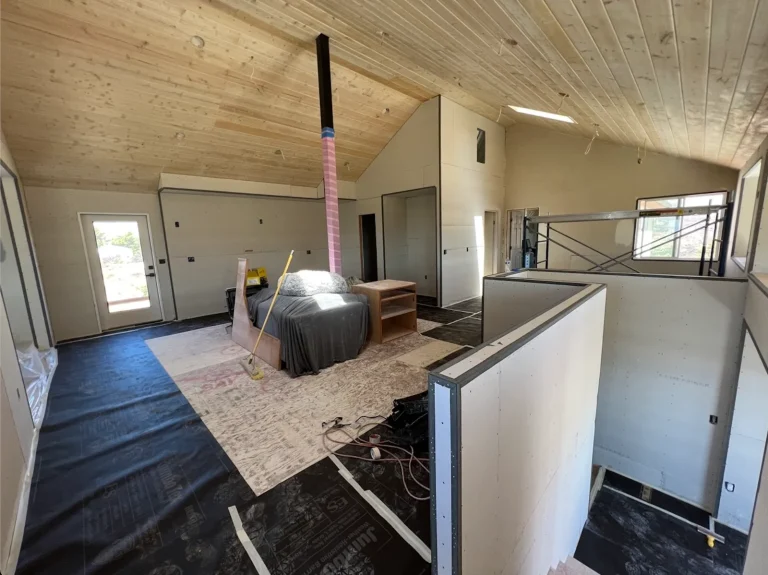
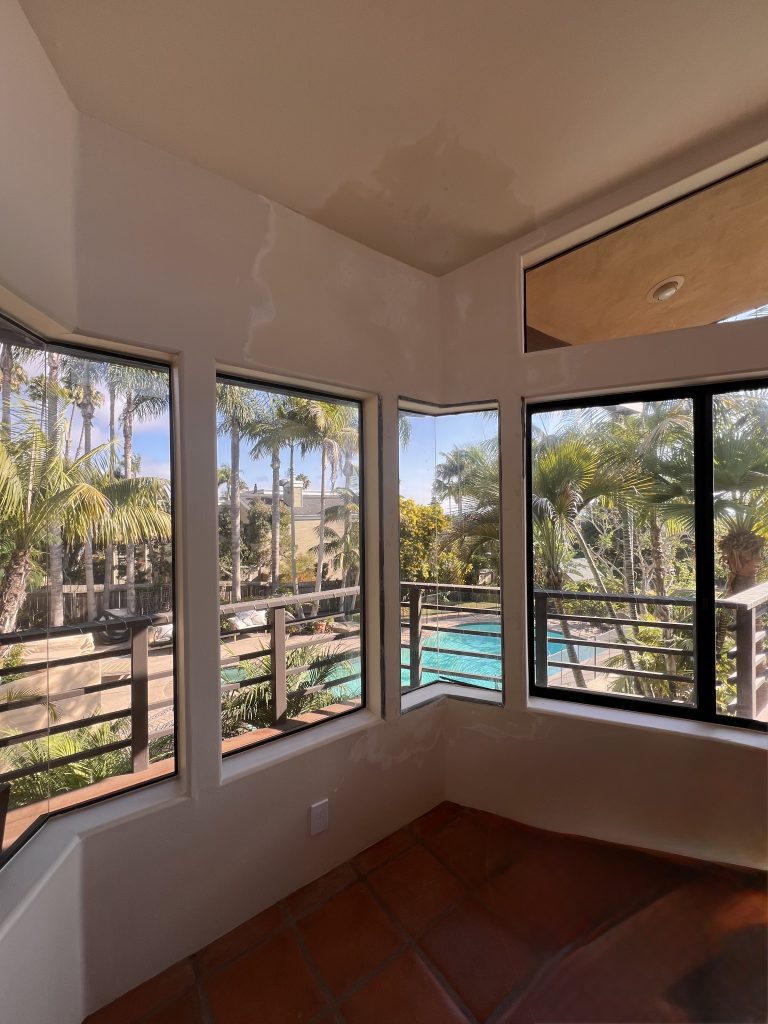
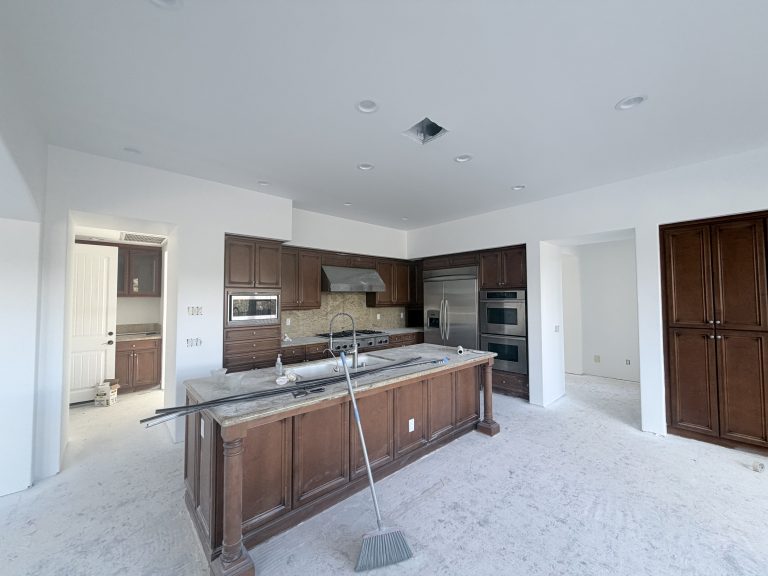
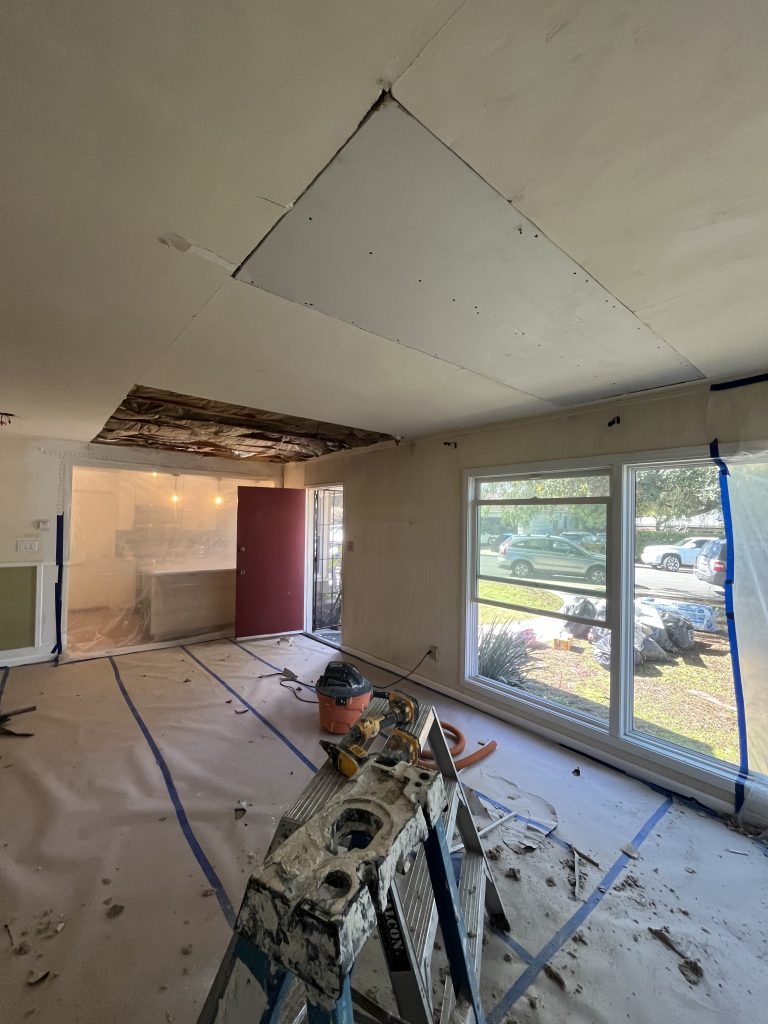
Finished walls, ready for paint.
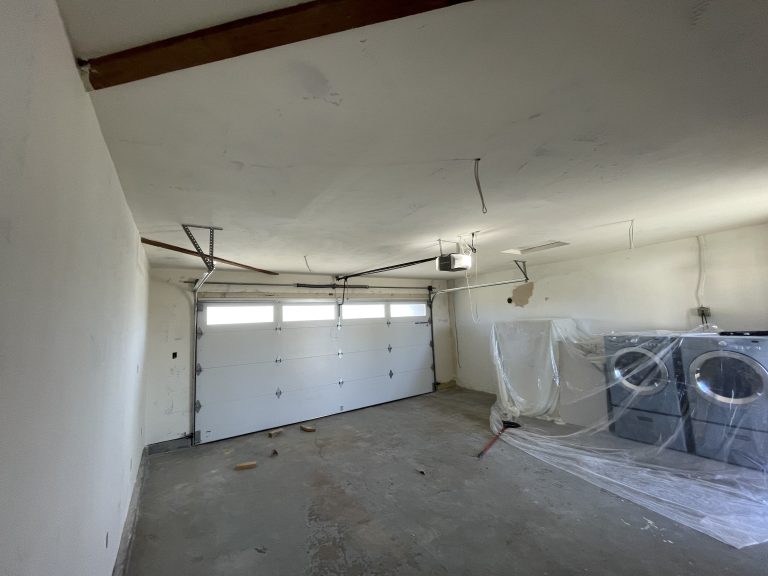
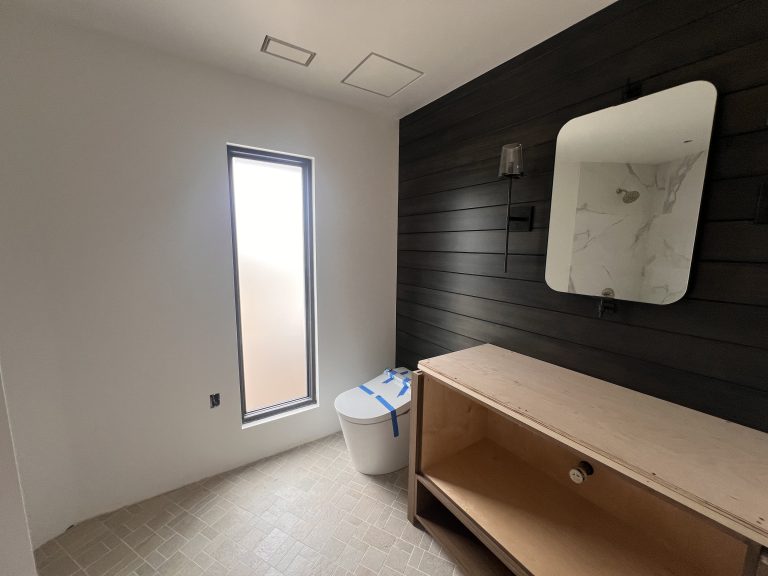
Custom homes, ADUs, and remodels across San Diego County — real SGP Drywall photography, finished installs, not stock photos.
Three easy ways to get a number.
Send what you have — photos of the walls or ceilings, or rough room dimensions — and we’ll come back with a clear scope and finish recommendation. Or request a job walk.
Retexturing,
answered.
Real answers to what homeowners ask before retexturing — popcorn removal, smooth-wall, and texture updates.
It depends on the surface size, how much prep the old texture needs, the finish you want, and whether ceilings are included. Send photos or room dimensions and we’ll give you a clear scope and number — no surprise add-ons.
A single room is often a couple of days because each thin coat has to dry before the next. Whole-home smooth work takes longer — we’d rather let it dry properly than rush it and risk defects.
Yes — heavily. Floors, furniture, windows, and openings are masked and covered before any scraping or sanding, and we clean up thoroughly when we’re done.
Yes. We scrape off popcorn / acoustic texture, then refinish the ceiling smooth or to a light modern texture — with heavy floor and furniture protection below.
We can take ceilings to a close-to-smooth finish. On older ceilings the result is a clean, modern surface — honest about what’s underneath rather than a guaranteed dead-flat plane.
It’s dusty by nature — the difference is how it’s controlled. We mask and protect the space first and manage the dust so it doesn’t travel through the home.
Yes — with skim coating we can get existing walls to a premium, close-to-smooth look. On older walls a subtle hand-troweled or imperfect-smooth finish often looks better than forcing dead-flat.
Not exactly. True Level 5 is defined on properly finished new drywall. On existing walls, old texture stays underneath — so we get you near-Level-5 in appearance, but it won’t behave like brand-new board.
Usually a light hand-troweled or imperfect-smooth finish — modern and calm, but forgiving of the small waves and flaws an older wall has. Fully flat can actually expose them.
Yes — we can refresh or re-lay knockdown and orange peel consistently across a room. Matching texture on a small patch is repair work — see our drywall repair page.
Yes — painted surfaces just need the right approach: a thin first skim coat with compound that bonds to paint, applied over a prepped surface, with proper drying. Thick coats rushed over paint are what fail.
For heavy texture, yes — we knock down high spots and rough buildup so the new coats sit on a sound surface and the final finish stays even.
Usually dust or trapped air the compound couldn’t grip, or coats applied too thick/too fast. Rolling compound into the surface in multiple directions lifts dust and fills the valleys, which greatly reduces them.
Text a few photos. We’ll take it from there.
No pressure, no overselling — just an honest look at your walls and ceilings and a finish recommendation. Call, text photos, or fill out the form and we’ll guide you on next steps.
We’ll review and reply with honest next steps — no obligation.
Retexturing connects to everything else we do.
Every specialty supports the others. From a single ceiling to a whole-home refinish, you stay with one crew that already knows the work.
Drywall Repair
Patch matching & small repairs
Learn more → InstallDrywall Installation
New builds, ADUs & remodels
Learn more → WaterWater Damage Repair
Leaks, ceilings & rebuilds
Learn more → CalculatorDrywall Calculator
Estimate sheets & materials
Learn more → AreasService Areas
Where we work in San Diego
Learn more → GuidesGuides & Blog
Texture how-tos & field notes
Learn more →How San Diego homes shape texture work
San Diego’s housing stock spans every texture era, and each one preps differently.
Find your city in San Diego County.
Search your city, or pick a region to see where we work.
Pick a region — or search your city.
Ready to modernize your walls and ceilings?
Send a few photos and we’ll come back with an honest scope and finish recommendation — no pressure, no obligation.
SGP Drywall · (619) 806-2169 · CA Lic. #1073567 · San Diego County