
B2B Trade Partnership

Drywall Repair Partner for San Diego Trades & Businesses

For restoration companies, plumbers, general contractors, ADU builders, electricians, HVAC crews, and remodelers across San Diego County.

When your work opens a wall, hand the repair off completely: we scope it from your photos, schedule directly with your customer, and finish the wall — so the repair is one less thing your office has to manage.

There’s no fee and no monthly charge to be a partner. You pay for work performed. Nothing else.

Photos first — we can usually provide guidance from photos, and most scopes don’t need a site visit to get started.

3rd-gen family drywall 15+ years All of SD County
The partnership model
1
You send the repair
Text photos with rough dimensions
2
We contact & schedule your customer
Access windows, timing, coordination
3
We complete the drywall scope
Hang, tape, texture match
4
You avoid managing the repair
Your calendar stays on your trade
The problem we solve

Your crew opens walls. Closing them right isn’t your trade.

A whole-home repipe leaves openings in nearly every room. A panel upgrade means cuts through a texture that hasn’t been sold since the eighties. A flood cut runs the full length of a living room wall.

None of that is a knock on your crew. Opening the wall was the job. Closing it is a different trade — feathered joints, matched texture, a patch the homeowner can’t find six months later.

Right now you have three options.

Send your own skilled people back to do finish work outside their lane.

Tell the customer “you’ll need to find a drywall guy” and hope it goes well.

This page

Or hand the repair to a drywall partner who takes it from there — including the part most partners like best: we manage all the scheduling directly with your customer, so nobody on your team is brokering access windows for a patch.

That third option is what this page is about. It lets you fold the drywall closeout into your customer experience — the job isn’t done until the wall is closed, textured, and ready for paint — without adding a trade your company was never built to carry, and without adding coordination work to carry it.

Two ways trades work with us

Choose the lane that fits your workflow.

Lane 1 — Planned, recurring work.

Repipes, remodel phases, scheduled closeout, multi-home and multi-unit runs. You know the openings are coming before you make them, so we plan the patch-back the same way you plan the rough-in: on a schedule, behind your crew, house by house.

Your project manager gets one point of contact, and once a job is handed off, we coordinate timing and access directly with your customer — your office doesn’t carry it.

Capacity is real here, not aspirational: our crews scale from a single technician on a small repair to fifteen people on a full scope, and multiple projects can run at the same time. We’re still honest about the calendar — if your volume outruns it in a given stretch, we’ll say so before it becomes your problem.

Scheduled cadence One point of contact 1–15 person crews

Lane 2 — Incident response.

Sometimes the hole wasn’t part of the plan. A cart clips a finished corner. Demo goes an inch past the line. A callback turns up damage behind earlier work.

For partners, we run an incident-response program: a pre-negotiated repair rate and a priority slot on our schedule, so your PM can tell the customer exactly what happens next before leaving the driveway.

Service-recovery pricing is agreed in advance, which means no awkward mid-crisis negotiation and no surprise invoice. It’s the fastest honest way to turn “we damaged your wall” into “and here’s the crew that’s already scheduled to fix it” — and once it’s handed off, we schedule the fix directly with the customer.

Pre-negotiated rate Priority scheduling No surprise invoices
Who this is built for

Select your trade. See how we fit.

Different trades open walls for different reasons. The patch-back discipline is the same; the context isn’t.
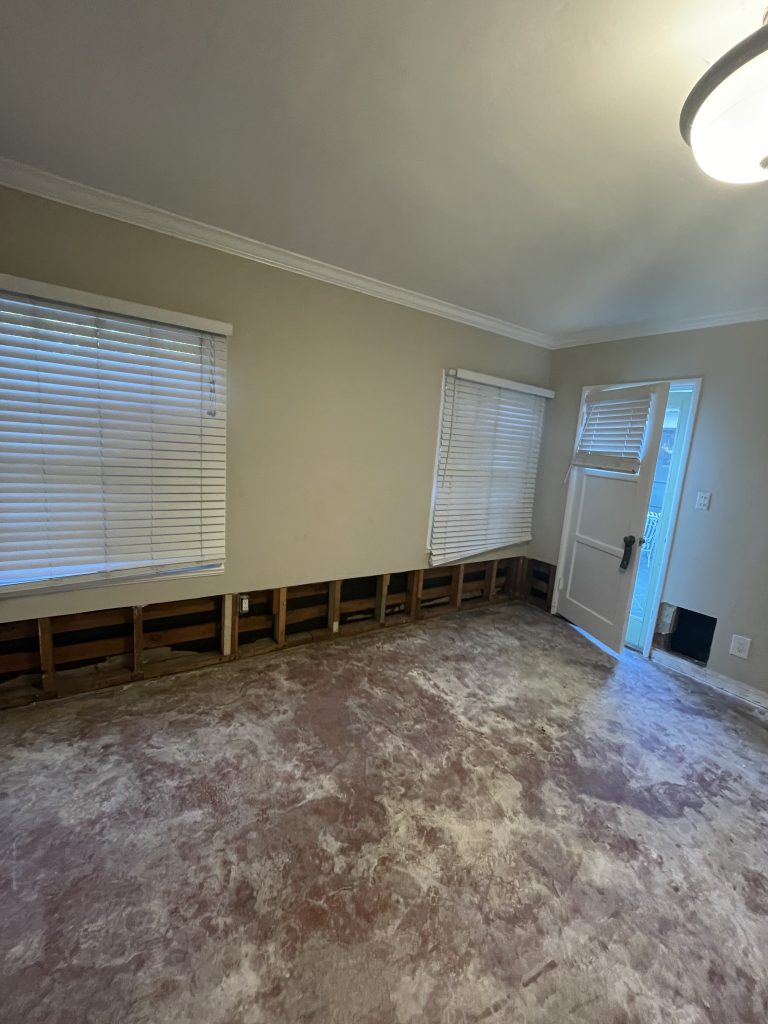
Living room with flood-cut openings along the lower walls, drywall removed to expose the framing after water mitigationFlood cuts

Restoration and water-mitigation companies

Mitigation and rebuild are different phases by industry definition. Your crews dry the structure and remove what can’t be saved — flood cuts, ceiling drops, cabinet-back openings — and putting the walls back is outside your scope on purpose. That’s the gap we fill.

The IICRC S500 standard classifies water losses by category, and a loss that starts as Category 1 clean water doesn’t always stay that way — time and contamination can move it, which your techs already document. EPA guidance is to dry wet materials within 24–48 hours; in most cases mold will not grow if this happens — the same direction your drying protocols point.

Once your drying logs close, we take the drywall side of the rebuild — hang, tape, texture blend across the flood-cut line — and we schedule that rebuild directly with the homeowner, so your file closes when mitigation closes. Our water damage repair page covers how we approach post-mitigation rebuilds in detail.
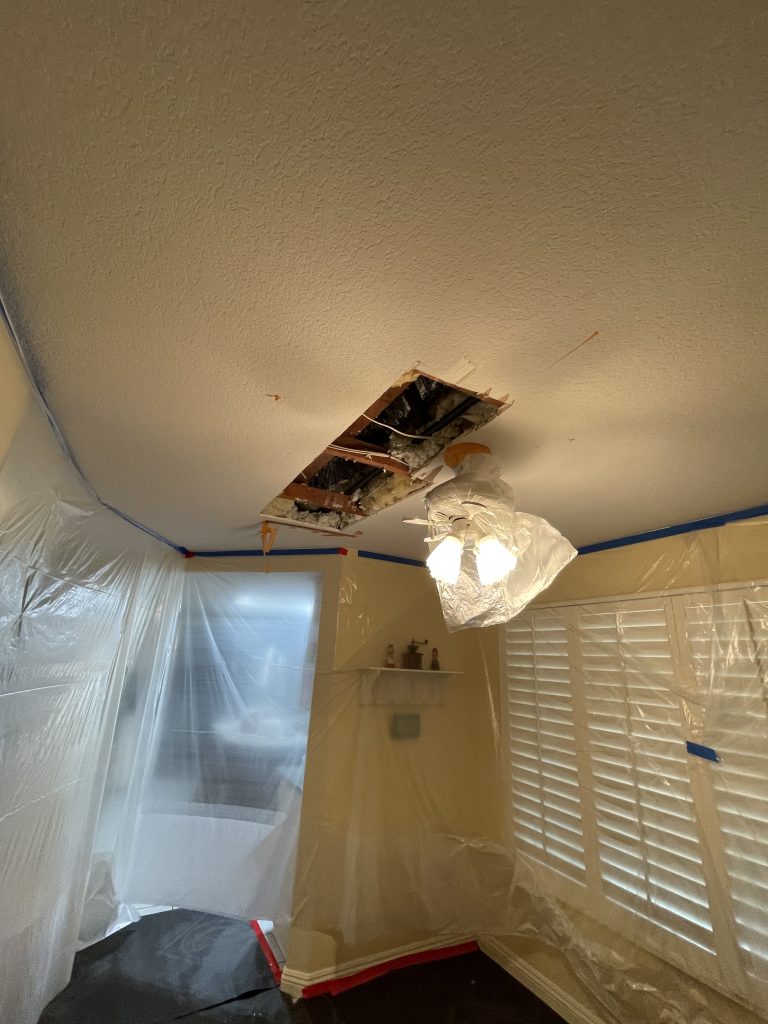
Ceiling drywall cut open to expose framing during a water leak repair, with plastic containment protecting the room belowRepipe openings

Plumbing and repipe crews

A whole-home repipe can mean a dozen or more openings per house — behind fixtures, at manifolds and angle stops, in ceilings under second-floor baths.

On multi-home schedules, we patch behind your crews on a set cadence so wall repair never becomes the thing that stalls your production calendar. For single service calls — a slab leak access, a shower valve opening — send photos and we’ll come back with a fast, clear quote, then handle the customer’s scheduling ourselves.
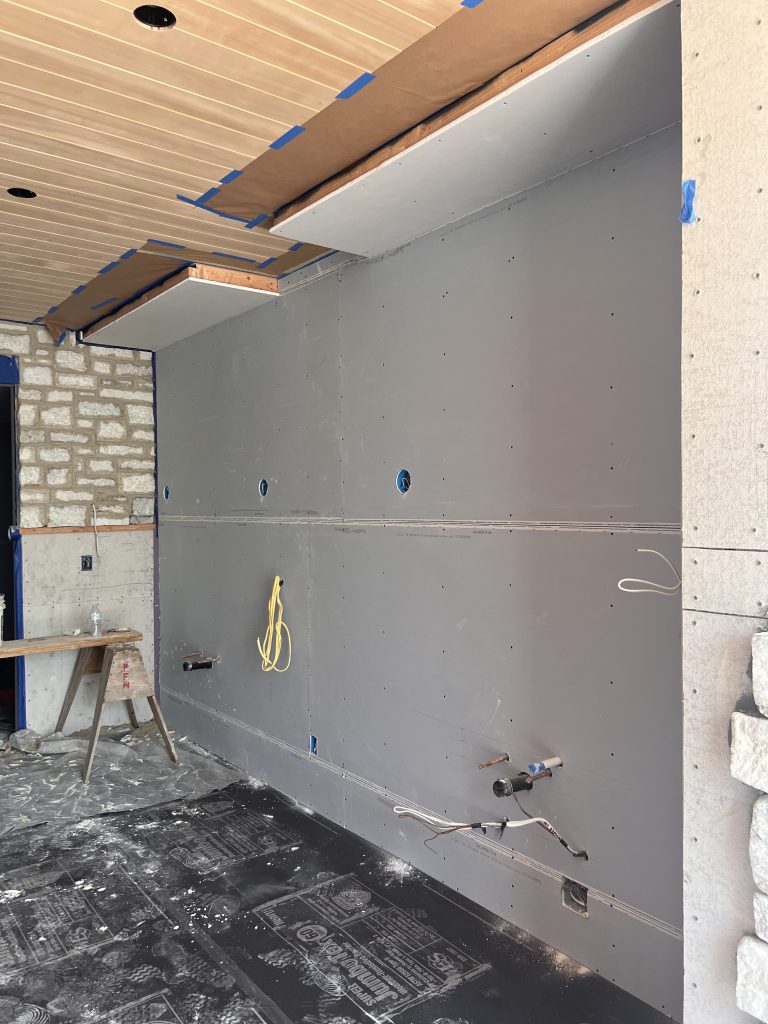
New drywall hung on the walls and ceiling of a garage ADU conversion in Chula VistaADU board scope

General contractors and ADU builders

San Diego ADU permits grew from 1,150 in 2020 to 3,991 in 2024 (UCSD Center for Housing Policy & Design), and small builders are carrying more drywall scope than ever. This is familiar ground for us: we’ve run about three ADU drywall projects a week over the last ten years.

For full-board scopes, our drywall installation service runs hang through finish; for sequencing an ADU build, our ADU drywall guide for San Diego builders walks through the order of operations; and where the scope calls for it, we handle metal stud framing as well.
Freshly hung drywall with cutouts made for electrical boxes and recessed lighting in a Mission Hills homePanel cuts

Electricians

Panel upgrades, EV charger circuits, and rewires in San Diego’s older housing stock mean cuts through lath-and-plaster transitions, deep-set boxes, and textures that haven’t been matched in decades.

Plenty of electricians can close a small opening within their own scope. Blending a forty-year-old texture across a visible wall is a different job — that’s finish work, and finish work is what the customer judges the whole project by. We take that judgment off your crew’s shoulders, and the scheduling off your dispatcher’s board.
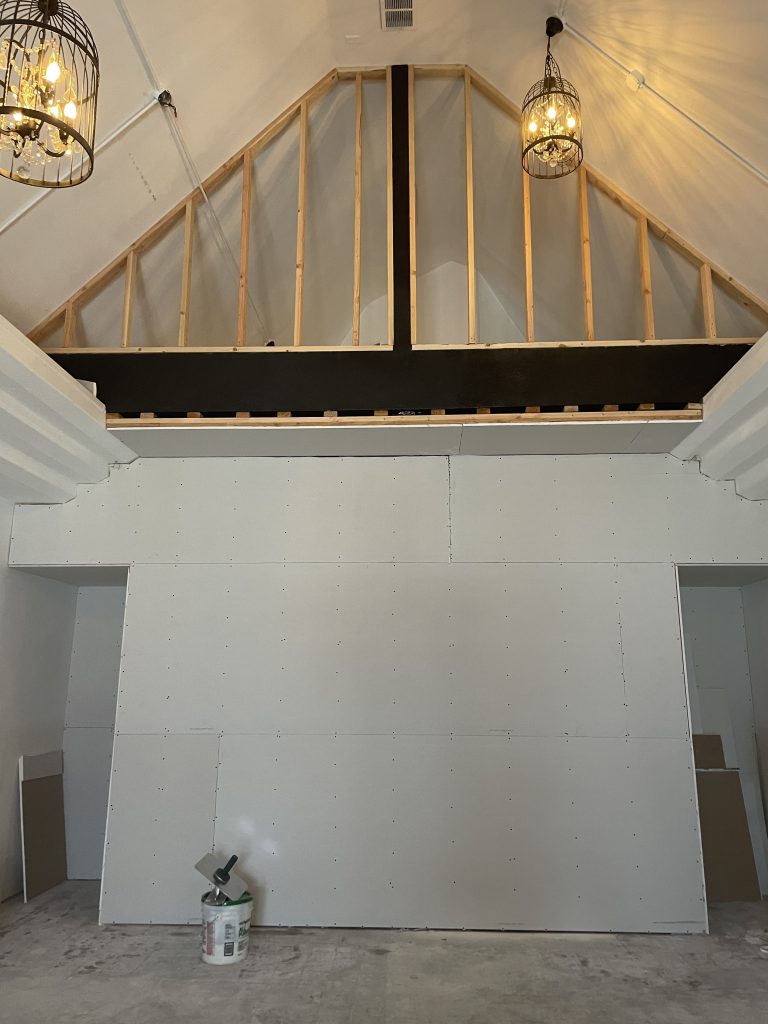
Ceiling drop framed and partially drywalled to conceal HVAC ductwork in a Mission Hills homeDuct chases

HVAC contractors

Duct chases, mini-split line-set runs, register relocations, furnace-closet reconfigurations. HVAC openings are disproportionately in ceilings and tight closets — the least forgiving drywall on the job. We close them so your install photos end with finished surfaces, not open chases.
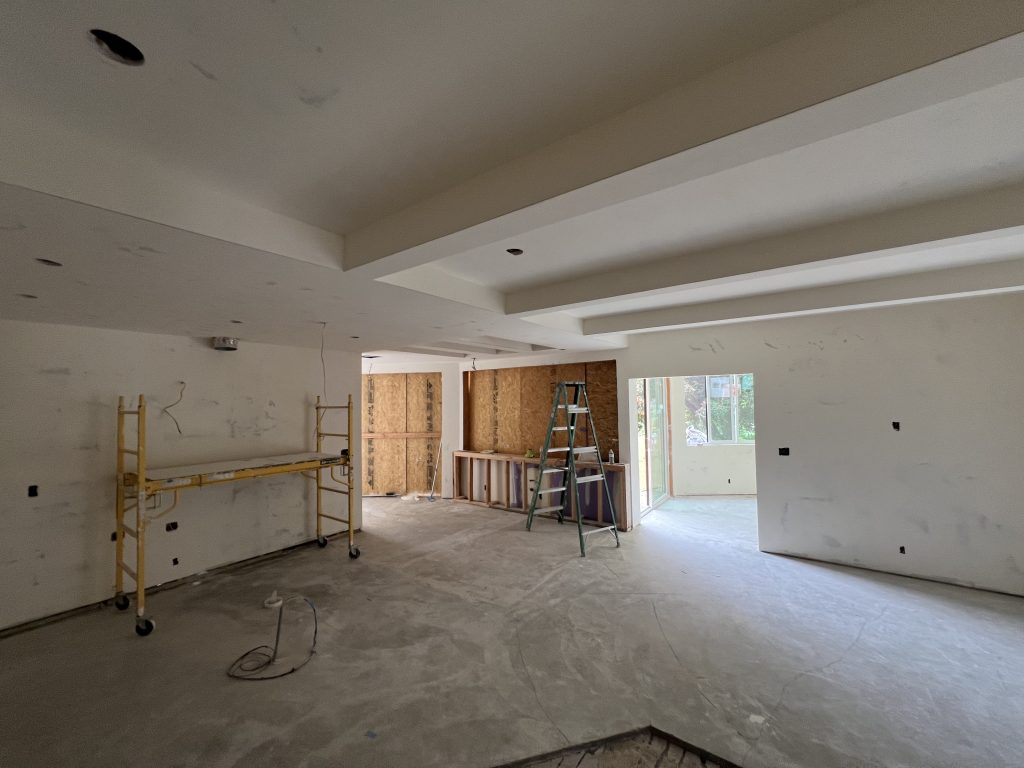
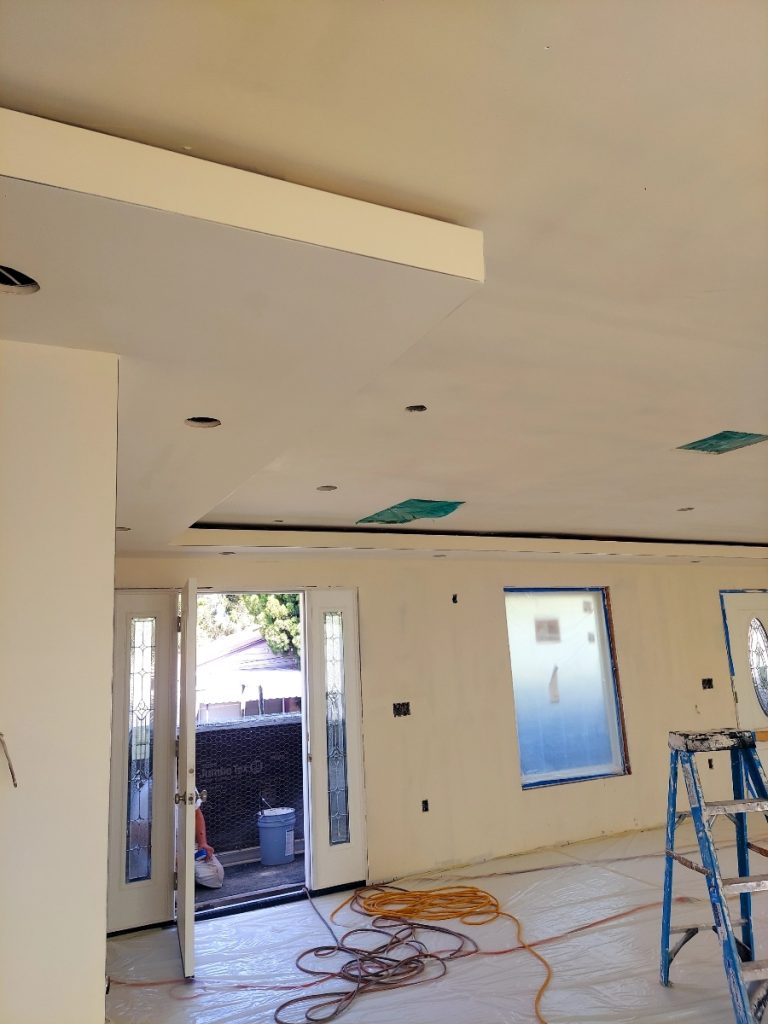
New drywall going up on the ceiling around beams during an open-plan remodel in Rancho Santa FeRemodel tie-in

Remodelers

For remodelers, the common pattern is patch-and-blend: tying new work into existing walls so the remodel doesn’t announce where it stops. Openings from moved switches, relocated plumbing, and removed built-ins get feathered into the surrounding field rather than boxed in with a visible seam. Hand us the punch-list drywall at the end of a phase and we’ll coordinate the finish visits directly with your client while your crew moves to the next job.

A note on trade scope

California’s contracting regulations (16 CCR §831) recognize that specialty contractors may perform work in other trades when it’s incidental and supplemental to the work their own classification covers — which is why a plumber closing a small access hole is a normal part of the trade.

Many contractors still choose to hand drywall closure to a dedicated drywall contractor, especially where the finish is visible, the texture is hard to match, or the volume goes beyond incidental. A partnership like this keeps each trade doing the work it was set up to do — and keeps finish quality off your plate.

This is general information, not legal advice; for questions about your own classification’s scope, the CSLB is the authority.

How it works — the partnership, job to job

Four steps. Zero surprises.

1

Photo-based scoping.

Text photos of the openings with rough dimensions to (619) 806-2169, or drop them in the partner form below. Most scopes come together from photos alone — no site walk, no waiting on an estimator.

Pricing follows the things that actually drive the work: patch size, patch location, and how many patches there are — and photos get you a fast, clear quote.

2

Scheduling, handled by us.

Once you hand a job off, we manage all the scheduling directly with your customer — access windows, timing, day-of coordination.

We slot the work behind your crew so the customer sees one continuous project, not a gap. In occupied homes: floor protection, containment where sanding happens, and cleanup before we leave each day.

3

Texture match.

The patch nobody can find is the point. We blend the repair into the surrounding field — including older and discontinued textures — rather than leaving a flat square that photographs like a scar.

Where a whole wall or ceiling needs to come back to one uniform finish, our texture matching and retexturing service covers that scope.

4

Closeout documentation.

Before-and-after photos, a short scope note, and an invoice formatted for your job file — so your closeout packet shows the wall finished, not just the trade work done.

The experience behind the patch

Three generations. 45+ years combined.

SGP Drywall officially started more than fifteen years ago, but the drywall goes back further: the family behind the company has done this work for three generations — more than 45 years of combined drywall experience. There’s more of that story on our About page.

The honest numbers, stated plainly:

~5/day
Drywall repairs

About five drywall repairs a day over the last five years — thousands of repairs, most of them exactly the patch-backs this page describes.

~3/week
ADU projects

About three ADU drywall projects a week over the last ten years.

40+/year
Custom & spec homes

Across the last 25 years of the family’s homebuilding, the generations behind SGP have hung and finished drywall on 40-plus custom and spec homes a year.

Family’s multigenerational building record

Scale works in both directions. A single technician handles a small repair; a fifteen-person crew handles a full scope; multiple projects can run at the same time. That range is why recurring partner work doesn’t have to wait behind a one-truck calendar — and why we can still send one person to one patch without treating it as a favor.

What customers consistently tell us they appreciate is communication, flexibility, and no nickel-and-diming. Those happen to be the three things a trade partnership lives or dies on, so we’d suggest testing us on exactly those: send one job and watch how the scheduling and the invoice go.

And partnering costs nothing to maintain — no membership fee, no monthly charge, no tier. You pay for work performed, and the relationship earns its keep on the work alone.

Questions trades actually ask

Straight answers.

Ask your question

Who patches drywall after the plumber or electrician leaves?

A drywall contractor. Trades open walls as part of their scope; closing and finishing them is a separate trade, and most service contracts leave it to the homeowner to solve. That’s the gap this partnership closes — the trade finishes the trade work, we finish the wall, and the customer never has to go looking for a “drywall guy” on their own.

What does “handing off the repair” actually mean?

It means the repair stops being your project the day you send it. We contact your customer, set the schedule directly with them, run the work, and close it out — you don’t manage dates, access, or day-of logistics. Your name stays on a finished job; your calendar stays on your own trade.

How fast can you get to a patch-back?

Scoping starts the moment photos land — that part never waits on a calendar. Scheduled partner work is slotted behind your crew’s timeline, and incident-response work for established partners moves on a priority track. We’d rather give you a real date from real photos than publish a number here, so send the photos and we’ll answer for your actual job.

Do you work in occupied homes?

Yes — most patch-back work after trades happens in occupied homes, and the process is built for it: floor protection, containment where sanding happens, cleanup before we leave each day, and clear arrival windows we arrange directly with the resident.

What’s your service area?

All of San Diego County — coastal, inland, North County, East County, and South Bay. Tell us where your jobs run in the form and we’ll give you a straight answer on scheduling for that area.

How does pricing work?

By the factors that actually drive the work: the size of each patch, where it sits (wall versus ceiling, tight closet versus open room), and how many patches there are. Recurring partners work from a pre-negotiated repair rate, and incident-response pricing is agreed in advance — so the number your PM quotes is the number on the invoice. No nickel-and-diming, and no surprise line items. Photos get you a fast, clear quote. For general background on what drives drywall pricing, see our guide to the cost of drywall installation.
All of San Diego County ·coastal ·inland ·North County ·East County ·South Bay
Start the conversation

Send photos for a quick review.

The fastest way to get started is to text photos of the openings with rough dimensions. We can usually provide guidance from photos, and most scopes don’t need a site visit.

Tip: Include your trade type and whether the work is recurring or one-time in Project Details. Photo intake is via text — snap and send to (619) 806-2169.

Not a business? Left with openings or damage after another trade finished? Start here.

Ready when you are

Send photos for a quick review.

Text project photos, get a real quote, and start clean.

Or text directly (619) 806-2169
(619) 806-2169
Scroll to Top